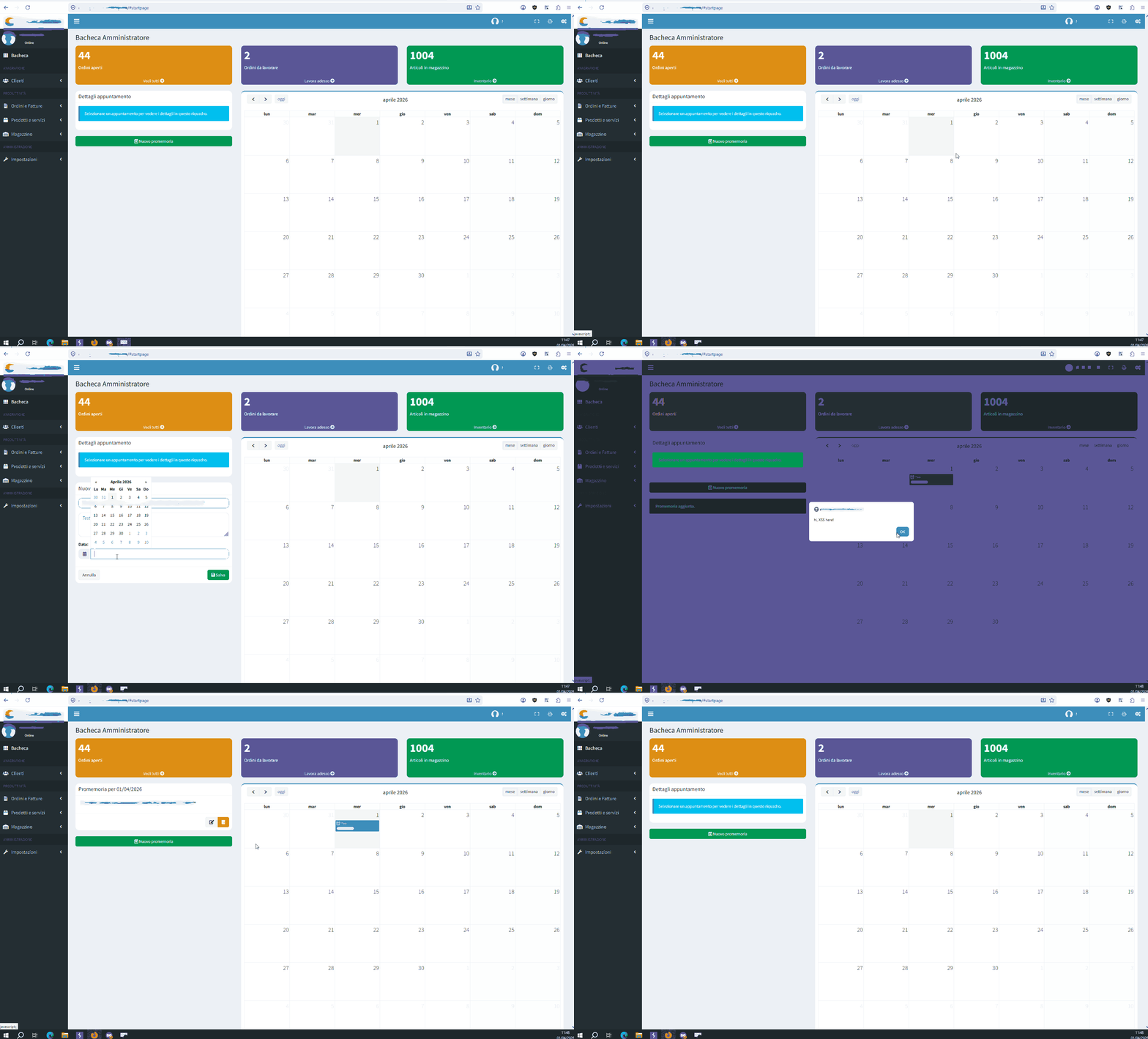
WebSystems WebTOTUM 2026 contains a low-severity cross-site scripting (XSS) vulnerability in the Calendar component. The issue can be triggered remotely over the network and requires user interaction (per the CVSS vector UI:R). The NVD description does not provide a specific affected function name beyond “Calendar,” but it states that the vulnerability is in an unknown function of that component and that it can be exploited publicly.
Technically, this is a CWE-79 (XSS) flaw: an attacker manipulates input that is later rendered in a web context without proper output encoding/sanitization. The NVD summary indicates remote initiation and a public exploit disclosure, consistent with an attacker crafting a malicious payload that, when delivered to a victim through the Calendar-related web interface, executes in the victim’s browser. The provided reference content includes a “WebTOTUM-POC.gif” from olografix.org, which appears to be a proof-of-concept artifact, but the scraped content here is not readable/meaningful enough to extract specific code paths, parameters, or the exact vulnerable endpoint/function within Calendar.
Impact-wise, the CVSS score is 3.5 (low). The vector AV:N/AC:L/PR:L/UI:R/S:U/C:N/I:L/A:N indicates: network reachability, low attack complexity, low privileges required, and user interaction required; no direct confidentiality or availability impact is indicated, while integrity impact is low. In practical terms, the primary risk is that an attacker can cause malicious script execution in the victim’s browser, potentially altering what the user sees or performs within the application session. The blast radius is therefore likely limited to the context of affected Calendar pages/users, but because it is XSS, it can still be meaningful in real deployments (e.g., session-related actions or UI manipulation), even if the CVSS rates confidentiality as none.
Mitigation: upgrade WebSystems WebTOTUM 2026 to the vendor’s fixed version. The NVD text states that the vendor was contacted and “quickly released a fixed version,” but no specific fixed version number is included in the provided material, so exact upgrade targets cannot be stated from the current references. As a workaround/detection guidance (given only the XSS nature is confirmed): ensure Calendar-related inputs are properly validated and output-encoded in the web UI, and monitor for suspicious script-like payloads or unusual Calendar parameter values in web logs. Because user interaction is required, also review any flows where users view or load Calendar content that could include attacker-controlled data.
CVSS:3.1/AV:N/AC:L/PR:L/UI:R/S:U/C:N/I:L/A:N
CWE-79